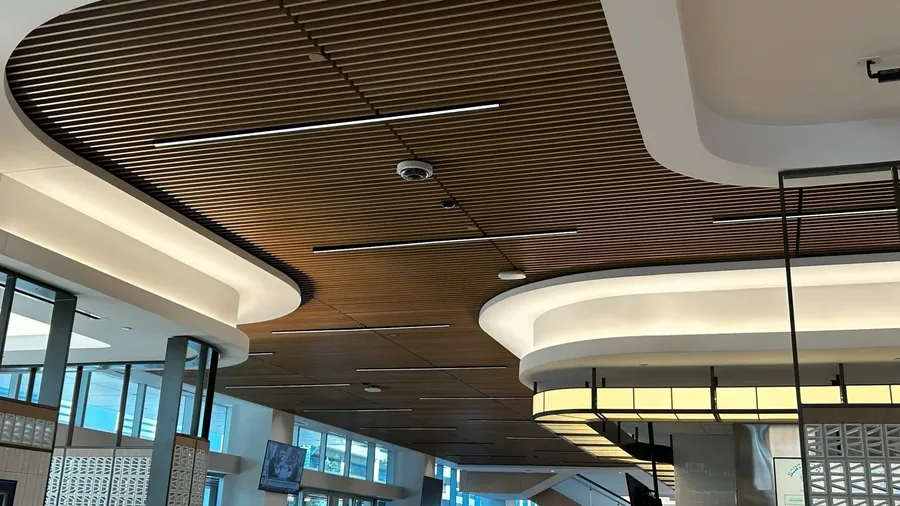
A curved slatted ceiling carrying linear light, cameras and sensors
The Rapp Firm · California · Field Guide

Two centimeters
of Italy.

K-array builds loudspeakers out of milled aluminum and stainless steel that are thinner than the trim they sit next to — and then makes them behave like line arrays. This wing is the part nobody explains: why the physics works, where it wins, where it doesn't, and how to qualify a room in one question instead of six.

22 mm
Vyper depth
21 g
A whole Lyzard
16 : 1
Speakers per amp channel
1990
Fiesole, above Florence
5 yr
Warranty
On the Bench
Vyper — twenty-two millimeters deepLyzard — twenty-one grams, and it's a real speakerPAT — no crossover, no port, no horn, no excusesKeystone — MM-Force low end in an architectural wall64Ω — sixteen speakers, one amp channel, zero transformersDante Ready — license the channels when the job needs themKSCAPE Rail — the first UL-certified 4-ft light with pro audio insideTruffle — a fungus in the reptile house, and nobody will explain itVyper — twenty-two millimeters deepLyzard — twenty-one grams, and it's a real speakerPAT — no crossover, no port, no horn, no excusesKeystone — MM-Force low end in an architectural wall64Ω — sixteen speakers, one amp channel, zero transformersDante Ready — license the channels when the job needs themKSCAPE Rail — the first UL-certified 4-ft light with pro audio insideTruffle — a fungus in the reptile house, and nobody will explain it
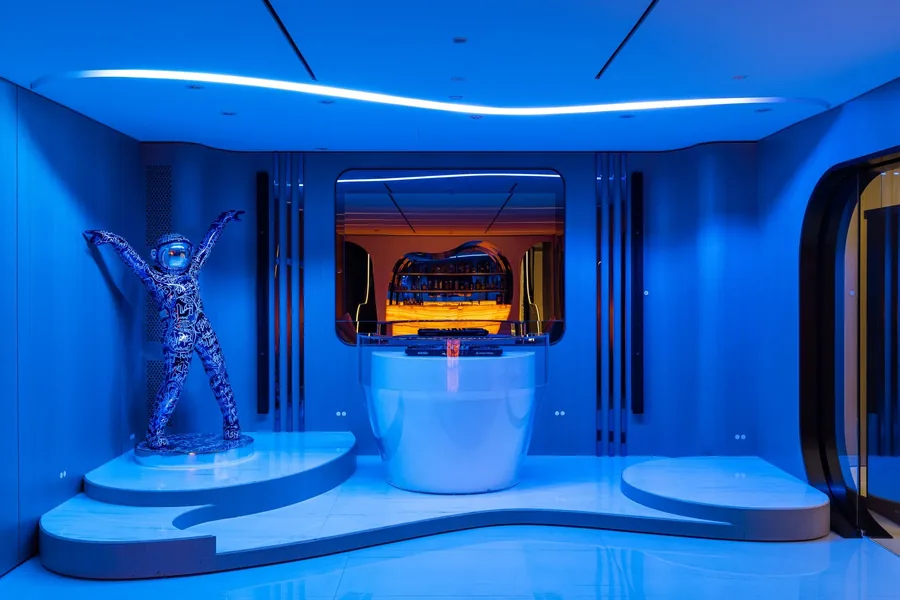
A design-led hospitality interior with no visible loudspeakers
The room the designer drew. Find the speakers.
The Premise

The box was always the problem.

And everyone agreed to stop noticing

Walk any high-end job and count the arguments you are losing. The designer wants the speaker gone. The architect has already drawn the soffit. The client paid for a stone wall and does not want a grille in it. And you are standing there with a cabinet that needs eight inches of depth because that is how loudspeakers have been built since before either of you was born.

Two guys in Tuscany got tired of that in 1990 — not in a laboratory, but while carrying gear into theaters and public squares. They started as an audio and lighting service company — theaters, cinemas, public squares. Which means the founding insight didn't come from a lab. It came from carrying the boxes. Their conclusion was that the enclosure is doing less work than the industry pretends, and that if you remove the crossover, the port, the horn and the tweeter, what's left can be milled out of a block of aluminum and mounted in the space you actually have.

That is the whole company. Everything downstream — the reptile names, the stainless, the RAL chart, the racetrack — is decoration on one engineering decision: less parts, less depth, more room.

The one questionHow much depth do you have? Not how many watts, not how many zones. Depth. If the answer is "eight inches and nobody cares what it looks like," this is not your line and I will say so. If the answer is "a mullion," "a stone wall," "a historic ceiling we are not allowed to cut," or "the designer will not accept a grille" — you just found the line.
The Physics

PAT: an acronym that is mostly subtraction.

Pure Array Technology · what's missing is the product
What's not in there
No crossover
Identical full-range drivers, closely spaced. Nothing hands off to anything. No crossover point means no crossover phase error — coherence holds in the near field and the far field, which is the part conventional columns can't do.
What that buys
Narrow vertical
A true line source is very wide horizontally and very tight vertically. The energy that would have cooked your ceiling and bounced off your floor simply never leaves the column. In a hard room that is intelligibility.
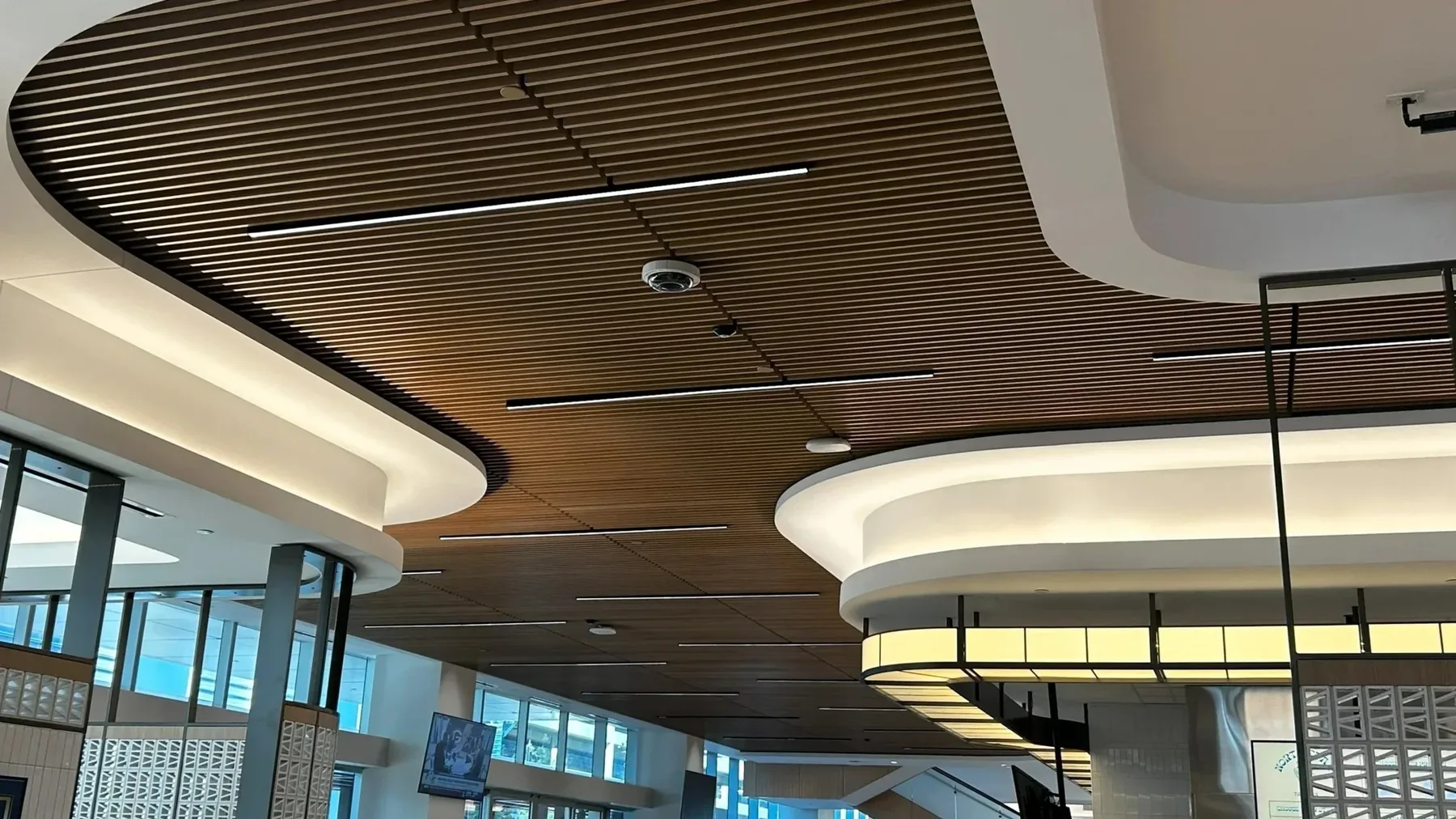
A slatted ceiling crowded with services
What it lets you do
Join them
No horn, no waveguide, so columns butt end-to-end into longer arrays with no pattern collision. Front row and back row hear the same tonal balance — without a delay ring and the ceiling penetrations a delay ring costs you.
Why you should care on a bidEvery delay speaker you don't hang is a ceiling penetration you don't cut, a circuit you don't pull, a tile you don't replace, and a coordination meeting you don't attend. PAT sells on intelligibility. It closes on labor. Watch it happen →
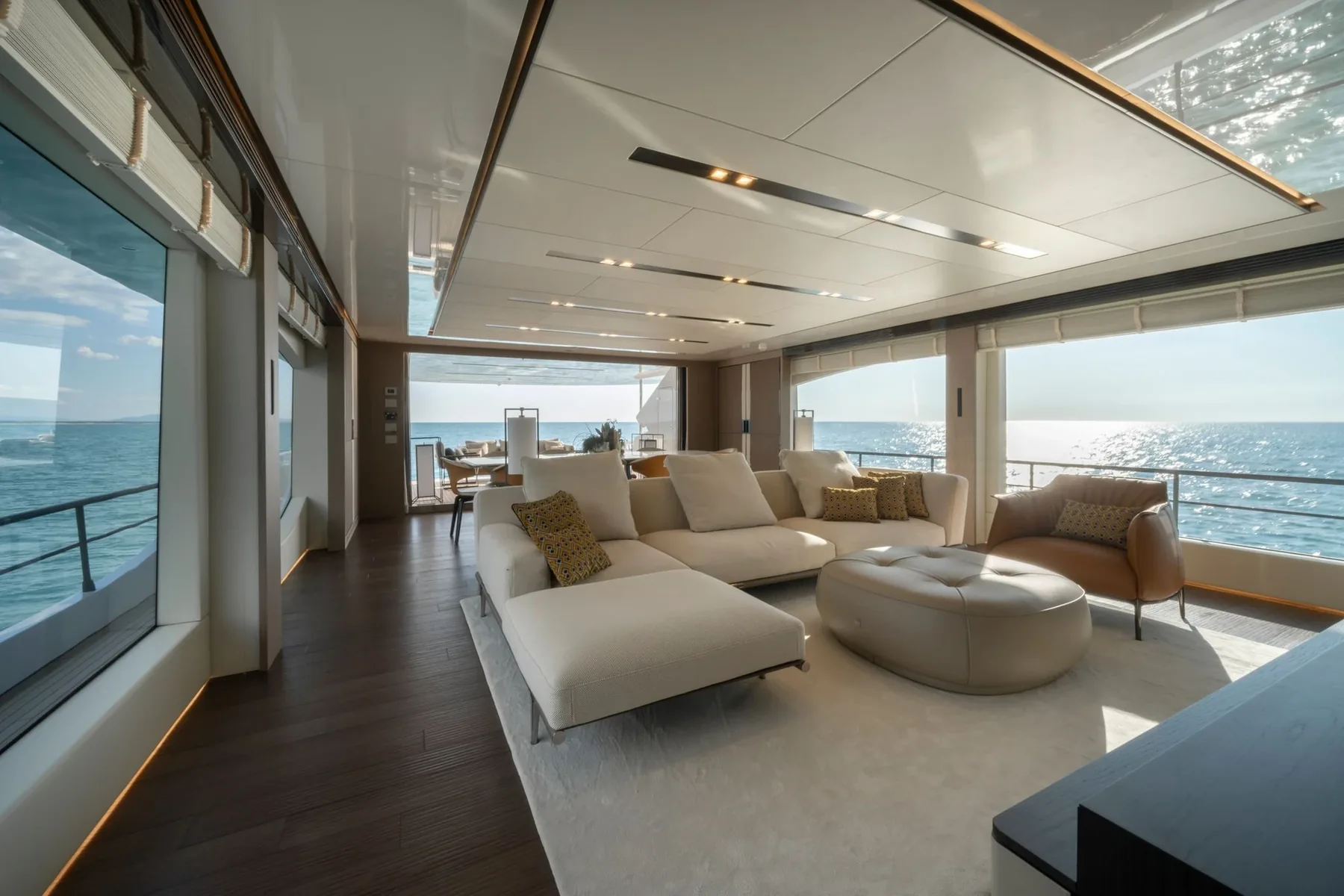
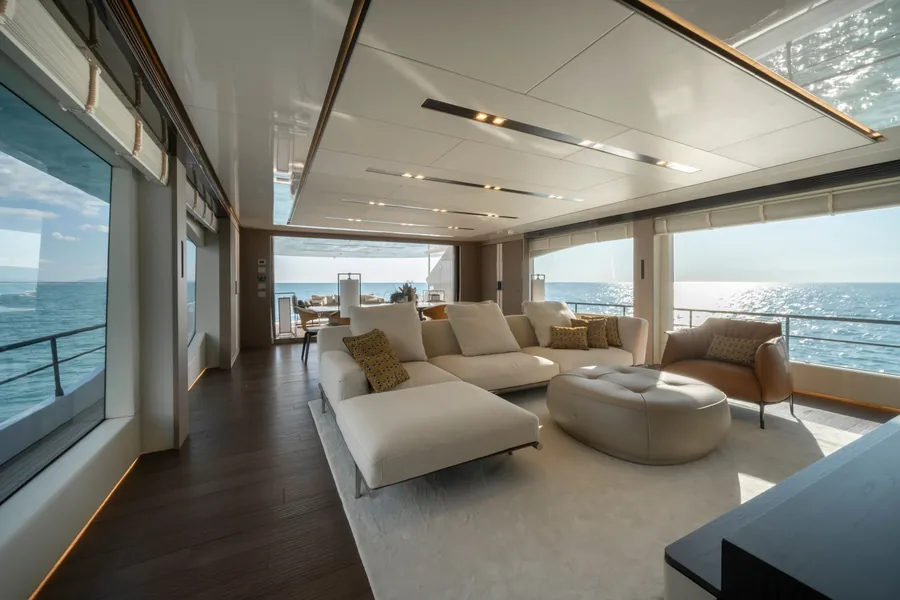
A yacht salon interior with concealed audio
The room where the designer said no speakers.
Yacht salons, gallery walls, historic ceilings, stone fireplaces — the jobs where the loudspeaker was never going to be allowed to look like a loudspeaker. That is not a niche. In high-end residential and hospitality it is most of the work, and it is the reason a twenty-two-millimetre line array exists at all.
The Group

Three houses, one factory.

Rooted in the Mugello · 43°57′00″N 11°22′59.88″E
The flagship
K-ARRAY
Stainless and milled aluminum, hand-finished, any RAL, marine treatment on request. The reptile house lives here — Lyzard through Firenze. Where the design pressure is real and the budget knows it.
The workhorse
KGEAR
The same physics, the accessible tier. GF columns run genuine PAT; GT brings a conventional 12" point source when the room needs output more than invisibility. This is how you keep one brand from lobby to loading dock and still win the number.
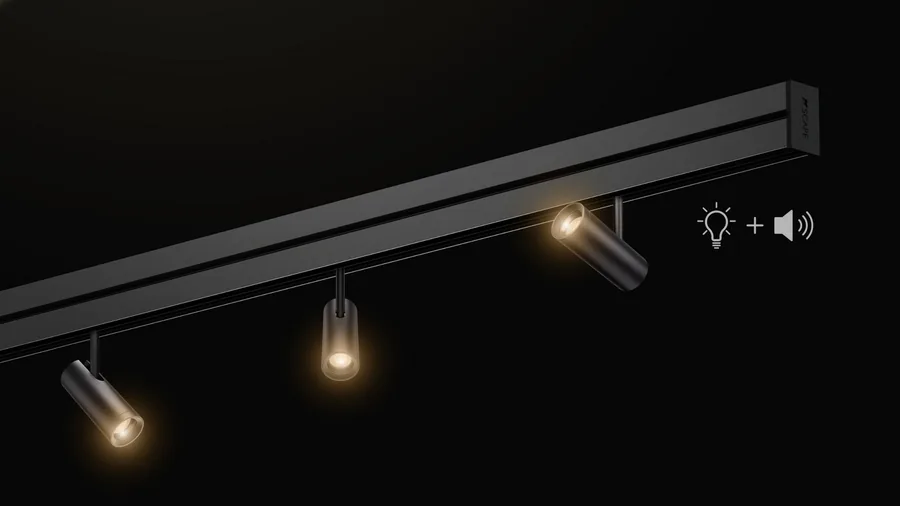
KSCAPE Rail S Track with three warm spotlights
The crossover
KSCAPE
Light and sound in one extrusion. Rail became the world's first UL-certified four-foot architectural light with professional audio inside — which is the certification that gets it past the electrical engineer instead of into a fight with him.
The Tools

Built in the field. Free to use.

No login, no gate, no lead form
A yacht salon interior
Lyzard · Kobra · Python · Kayman · Anakonda · Dragon · Truffle
The Reptile House

The Italians named these. They were right.

A selection · the full taxonomy runs deeper
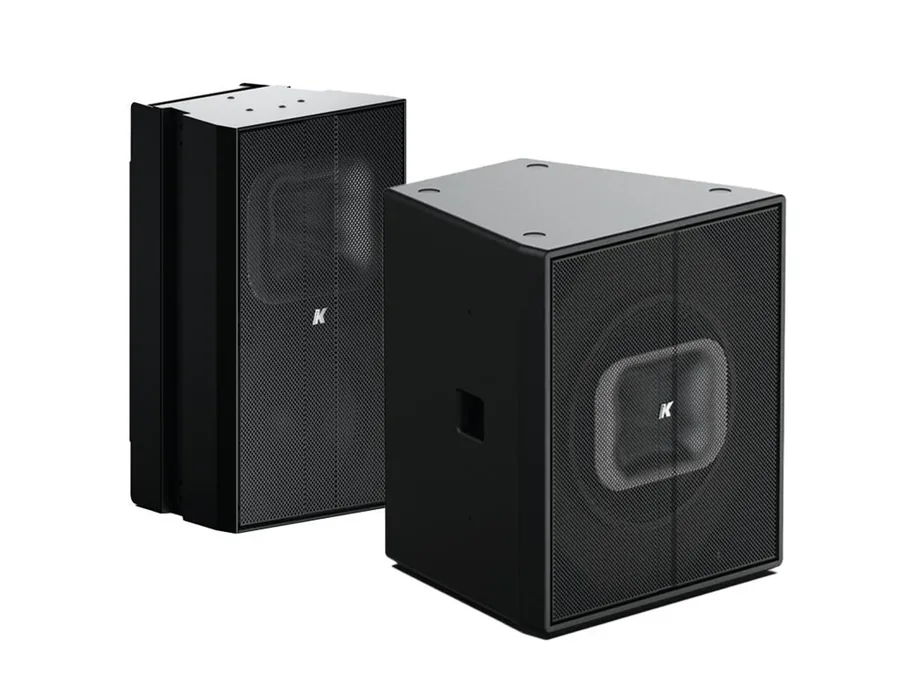
K-array subwoofer enclosures
KSCAPE Rail S Track
A yacht salon
A hospitality interior at night

The catalogue reads like a herpetology field guide with one mushroom filed in by mistake. That is not an accident of translation — it is a company that names things the way it builds them, without a committee.

And the low end is where the whole argument gets honest. A Lyzard starts at 500 Hz and says so. Twenty-two millimetres of Vyper starts at 150. Every thin element in this line is a promise that something else is doing the bottom two octaves — a Truffle under a banquette, a Rumble in the joinery, a Keystone in a wall that was never framed for a subwoofer.

K-ARRAY
Lyzard
Lacerta minima
The smallest thing K-array makes and the reason the line exists. A single 0.5" long-excursion neodymium driver in a milled aluminum block the size of a wine cork. Twenty-one grams. You will lose one before you install one.
2.2 × 3.7 × 1.1 cm21 g140° × 140°500 Hz – 18 kHz
The room where the designer said no speakers. Pair with Truffle or Rumble — it starts at 500 Hz and means it.
K-ARRAY
Vyper
Vipera plana
Eight 1" neodymium cones in a frameless extruded aluminum chassis twenty-two millimeters deep. Bracketless on any flat surface, or recessed and gone. This is the one that ends the argument about whether the speaker will 'stick out.'
22 mm deep8 × 1"10° V × 140° H150 Hz – 18 kHz
Boardrooms, lobbies, retail, anywhere a millwork detail is already drawn and nobody wants to redraw it.
K-ARRAY
Anakonda
Eunectes flexibilis
Two meters of loudspeaker that bends. It is a snake. It goes where a box cannot go — around a curve, along a stair nose, under a bench, into a radius wall that the architect is very proud of.
2 m longflexiblePATproblem-solver
The curve. The cove. The place you measured twice and still can't fit a cabinet.
K-ARRAY
Python
Python inoxidabilis
The Kobra's larger cousin — 3.15" drivers, same stainless frame, same PAT physics, more output and more low-mid before you need help. Reproduces the entire vocal range with the intelligibility that sells the job.
3.15" driversstainless steelPATSPOT / FLOOD
Theater, broadcast, houses of worship. The workhorse column when speech has to win.
K-ARRAY
Kayman
Caiman gradiens
Eight 4" transducers, stainless, PAT — the most powerful passive column in the range. The EBS version adds Electronic Beam Steering, which means you aim the array in software instead of on a lift with a protractor.
8 × 4"stainless steelPATEBS option
Long, tall, loud and reverberant. The room where mechanical aiming is either impossible or a two-day rental.
K-ARRAY
Dragon
Draco spixelensis
High-pressure point source with deliberately rapid falloff — loud where you're standing, quiet twenty feet later. The KX2 introduces Spixel technology in a 2.5" full-range package.
point sourceSpixelhigh near-field SPLfast falloff
Zoned patios, terraces, and any neighbor-adjacent install where spill is the whole problem.
K-ARRAY
Keystone
Clavis tenuis
An ultra-slim architectural subwoofer built on Powersoft's MM-Force motor — the force-cancelling design that puts real low end in a chassis too shallow to have any business making it, without shaking the wall it's mounted to. On-wall or in-wall. All-aluminum.
MM-Forceultra-slimon/in-wallaluminum chassis
The low end in a wall that was never framed for a subwoofer. This is the one that unlocks the whole slim argument.
K-ARRAY
Truffle
Tuber sonorus
An impressively small aluminum-alloy sub designed to be hidden outright — under a bench, inside a banquette, behind the millwork. It is named after a fungus. It is in the reptile house anyway. Nobody at the factory will explain this.
extremely compactaluminum alloyconcealablepassive
Lyzard and Vyper systems in rooms with no visible place for a sub. Which is most of them.
Walk the whole house →
The Rapp Report · Now Showing
The Electronics

Kommander, osKar, and the Dante move nobody uses.

The brain that makes the small speakers survive
K-array subwoofer enclosures

Passive K-array elements are small, long-excursion and DSP-protected, which means they want a Kommander amplifier with the factory preset loaded. Inside every one is the Integrated Electronic Brain running osKar on a quad-core processor — and it exposes a REST API, which is the sentence to read out loud to your programmer.

Then there's the part I keep having to explain twice: K-array was the first manufacturer to implement Audinate's Dante Ready licensing. The hardware ships Dante-capable and dormant. You activate it in the field, over the internet, buying only the channel count that job needs. You stop pricing Dante speculatively — and speculative line items are the ones that get value-engineered out from under you.

I'm Dante certified and this still surprises meIt moves the moment you spend money to the moment you know you need it. That is a cash-flow feature wearing a firmware costume. The long version →
Control
Software
K-Framework3 · K-Connect · K-Control · K-Monitor · K-Cloud · osKar / osKar Plus
Third-party plug-ins
It drops into your stack
Crestron · Q-SYS · Symetrix · Basalte · WAVED — so the amp is a device on the control system, not an island with its own app the client will never open.
Match an amplifier →
A slatted architectural ceiling with integrated linear lighting
Two trades. One extrusion.
On a real project the ceiling is contested territory — lighting has a reflected ceiling plan, mechanical has diffusers, fire has sprinklers and strobes, and audio shows up last and takes what is left. KSCAPE collapses two of those claims into one device, which is worth more to the general contractor than the audio spec is.
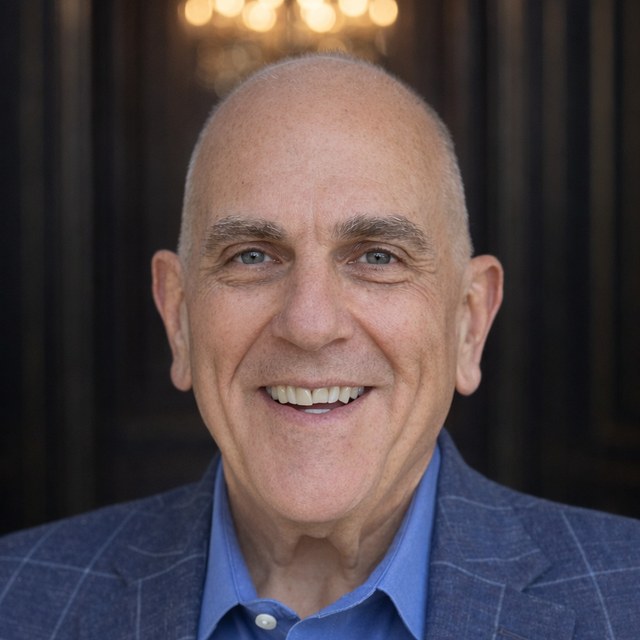
Evan Rapp
Evan Rapp
The Rapp Firm · California
I started faxing the Rapp Report to my Klipsch dealers a long time ago, because dealers deserve to know they're supported and they benefit from the explanation even when they've got no time for it. Same philosophy, different decade. This wing exists because K-array is the most under-explained line in the American channel — dealers know the speakers are thin and gorgeous, and almost nobody has been told why the physics works or how to qualify a room for it in one question. AVIXA CTS, Dante certified, thirty years in, and I've held most of this gear.
Evan
Built on spec

A dealer resource for a line worth selling, built before anybody asked. No representation agreement, no distribution agreement, no compensation, no relationship implied. If K-array ever wants to talk, they know where the fax machine is.

Evan Rapp
The Rapp Firm · California
Back into the firmThe Players →All ToolsThe Rapp ReportAbout Evan