01 How much depth do you actually have?
The cavity, the mullion, the reveal, the space behind the stone. Measure it —
don't estimate it. This one input does most of the work.
02 How far to the last listener?
Speaker to the back of the coverage area, in feet.
03 What does the room do when you clap?
Stand in the middle and clap once. That answer matters more than the square footage.
04 Who wins the argument?
Be honest. There is always somebody with veto power.
05 What's the air like?
Move a slider.
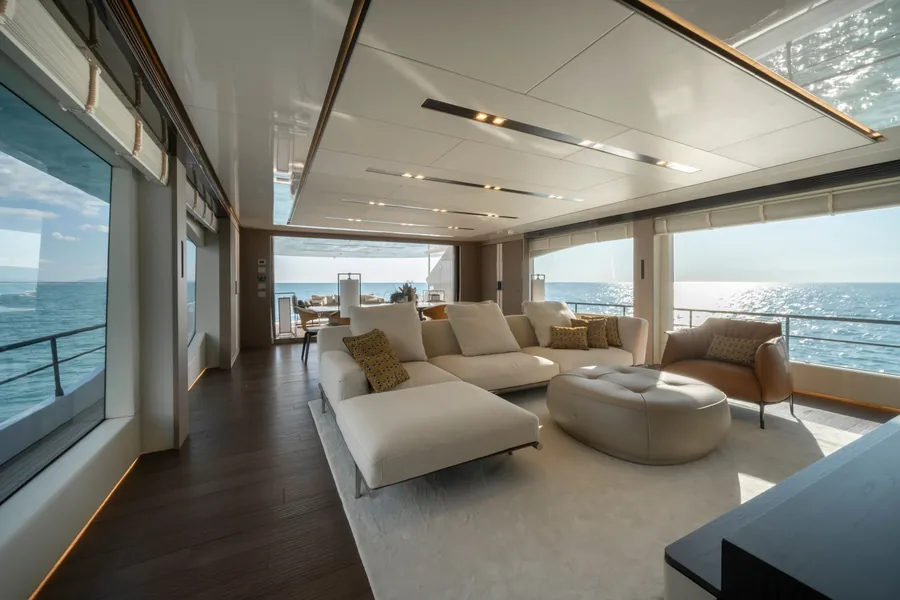
Marine treatment is a build option, not a repair
The environment answer matters
Salt is patient.
Several products — Vyper and Keystone among them — offer marine treatment on request, carrying an M in the order code. It is specified at build, not applied afterward, so the decision happens at the quote and never again.
Coastal California, yacht refits, pool houses, anything on a bluff. If you are within smelling distance of salt and you skipped it, you will find out in year three and it will not be a warranty conversation.
What this tool will not doIt will not tell you
K-array is always the answer. Set depth to 150 mm, room to normal and priority to output, and it
will send you to KGEAR — or tell you to go buy a conventional box, because that is the honest
call. A selector that always picks the expensive thing is a brochure, not a tool.